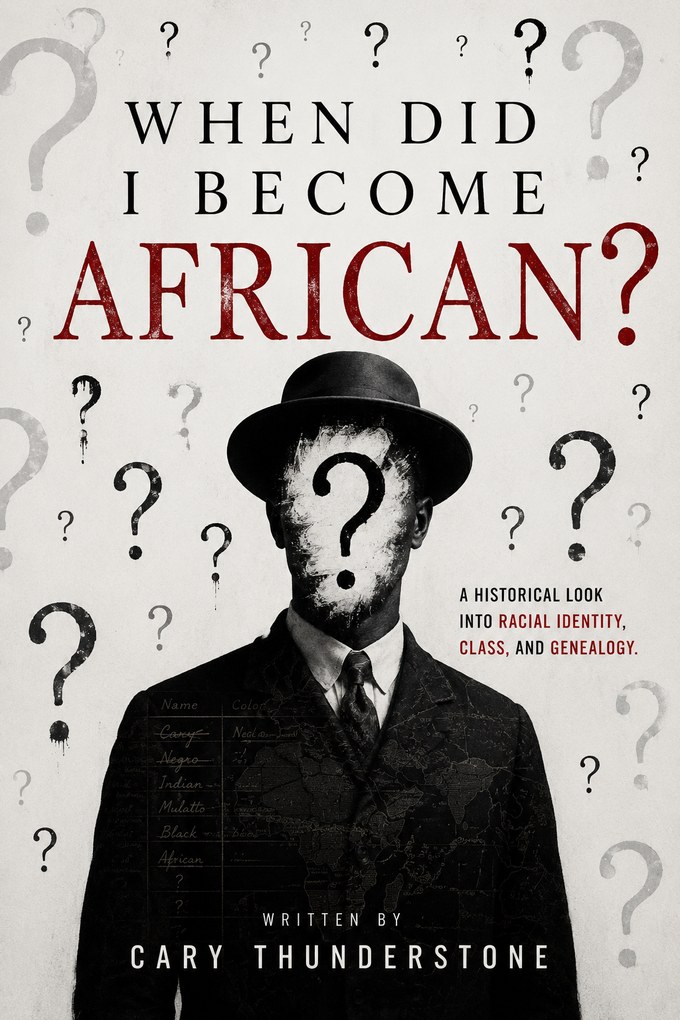
When Did I Become African?
A Historical Look into Racial Identity, Class, and Genealogy
I traced my own family tree and found something missing. No census, no registry, no archive, no church book, no government record identified a single one of my ancestors as African. I widened the search — friends, then strangers, then public figures. The same blank field, every time.
“Empty your cup.” — Kurimeo Ahau
Digital editions are DRM-free. Read or listen on anything you own.
What this book actually does
This is not another retelling of the Middle Passage. It is an audit of the record that story rests on.
It follows one blank field back through four centuries of paperwork, reading the words as the record actually wrote them — Black, Swarthy, Olive, Brown, Fair, Tawny, Negro, Indian, Mulatto, white, Caucasian — and asks a question the standard account never has to answer: when, exactly, did a word about status and complexion harden into a word about origin?
The answer is in the receipts. A king described as a “tall black man.” A queen entered as “Black Lady.” Complexion columns that never once track a continent. A term of art that becomes a birthplace in 163 years, with no document forcing the change — and the same failure running in the opposite direction, from white to Caucasian.
Every claim is held to one rule throughout: document or discard. Where the record is blank, the book says so instead of filling it in.
Inside
About the author
Cary Thunderstone is a genealogist and independent researcher. He began this work trying to answer an ordinary question about his own family and could not make the documents agree with the story he had been taught.
The research behind this book runs on the same rules his genealogy does: oldest source wins, a blank field stays blank, and no origin gets attached to a person the record never gave one to.